Hardware Details · 2026
Slow-Close Lids on Bidet Seats: Worth Paying For?
By Ilane TallUpdated October 7, 2026Research-based
Best Bidet Seats is reader-supported. When you buy through our links we may earn a commission, at no extra cost to you. Commissions never change which products we recommend.
It's eleven at night, everyone else is asleep, and the last thing anyone wants is the crack of a toilet lid hitting porcelain loud enough to carry through two walls. On a standard hinge, that's exactly what happens every time someone lets go a little early — the lid free-falls the last few inches and lands with a bang. A slow-close (also sold as "soft close") hinge is built specifically to stop that from happening, and on an electric bidet seat it matters more than it does on a plain toilet lid, for a reason most listings never explain: the lid is heavier.
An electric bidet seat's lid isn't just a sheet of molded plastic. Depending on the model it's carrying a heated-seat element, internal wiring, sometimes part of the water line, and a thicker shell to hide all of it — which means the lid that's slamming down has noticeably more mass behind it than the lid on the toilet it replaced. More mass dropped the same distance means more energy at the moment it stops, which is exactly the scenario a damped hinge is designed to absorb. This guide covers what that mechanism actually does differently inside the hinge, why a slammed lid is the single most common way these hinges fail, how to tell from a listing whether "slow close" is a real damper or just a phrase in the bullet points, and what your actual options are if you already own a seat that lacks one.
One honest note before we go further: we don't run a testing lab, and we're not going to pretend we measured hinge decibels with a sound meter. Everything below comes from how these mechanisms are engineered, published listing specifications, and the patterns that repeat across thousands of verified owner reviews — including the critical ones, which is usually where a hinge's real behavior shows up first.
The hardware
What a slow-close hinge physically does differently
A standard hinge is just a pivot point. Gravity does all the work: once the lid tips past its balance point, nothing resists it, and it accelerates the rest of the way down under its own weight until it hits the bowl or the seat beneath it. There's no mechanism involved — which is also why standard hinges are so cheap to manufacture.
A slow-close hinge adds exactly one extra part to that pivot: a small damper, usually a rotary hydraulic cartridge or a compressed silicone/air piston, built into the hinge barrel itself. It's the same basic principle used in soft-close kitchen cabinet doors and soft-close toilet seats for years before bidet seats adopted it. The damper doesn't engage for the whole swing — the lid still falls freely for the first part of its travel, the same as a standard hinge. It's only in roughly the last quarter of the drop, once the lid is close enough to the bowl that an uncontrolled landing would do damage, that the cam inside the hinge compresses the damper and converts a free fall into a controlled, even descent. The lid settles into place instead of landing on it.
It's a fully mechanical, passive system — no battery, no motor, no software, nothing to charge. That's worth knowing because it means the damper itself is a wear item with a long but finite life, like a shock absorber, rather than an electronic feature that can glitch or need a firmware update. It also means the deceleration happens whether the lid is dropped gently or shoved — the hinge doesn't know the difference, it only knows the final stretch of its own travel.
Failure mode
Why a slammed lid is the most common way hinges fail
Plastic hinges rarely fail from ordinary use — opening and closing a lid gently thousands of times barely stresses the pivot point at all. What actually cracks a hinge housing is repeated shock loading: the same sudden jolt, over and over, concentrated at one small point in the plastic. That's a textbook fatigue failure pattern, and a slammed lid is close to the worst-case version of it, because the entire weight of the lid arrives at the hinge all at once instead of being absorbed gradually.
This is where the extra weight of an electric bidet seat's lid works against it. The same drop, repeated daily, delivers more energy to the hinge mounts on a heated, wired lid than it would on a bare plastic one — which is also a theme that runs through our bidet seat weight capacity guide: hinges are consistently the first part of a seat to show stress, well before the electronics or the wand. The theme that repeats across owner reviews on standard-hinge electric seats: the hinge crack shows up within the first year or two, and it's almost always attributed to the lid being let go rather than lowered — a habit that's easy to fall into once, and hard to break in a busy household with kids or guests who've never been told to ease it down.
A damped hinge doesn't just make the lid quieter — it removes the shock-loading event from the equation entirely, every single time, regardless of who's using it or how carefully. That's the actual engineering case for paying for one, separate from the noise. On a seat with the mechanism, there's no "gentle" or "careless" close; the hinge enforces the same controlled descent either way.
What changes
The noise difference, against a standard hinge
We don't have a sound meter reading to hand you, and we wouldn't trust one from a listing page even if a seller offered it — acoustic results depend too much on the specific bathroom, the flooring, and the bowl material to generalize into a single number anyway. What we can describe honestly is the mechanical difference, which is the actual source of the noise either way. A standard hinge lets the lid accelerate under gravity right up until the moment of contact, so there's a single, sharp point where plastic (or the plastic lid against a porcelain tank lid) meets at its highest speed — that's the clack. A damped hinge removes that moment of contact entirely by decelerating the lid before it gets there, so it arrives at essentially zero speed and there's no distinct impact to hear. It settles rather than lands.
Owners of damped seats consistently describe this with some version of the same test: can you close the lid without anyone in the next room noticing? That's a meaningfully different outcome from "quieter," and it's the reason the feature shows up so often in reviews of homes with thin walls, shared bathrooms, or a baby asleep down the hall. It's also worth remembering that, because electric bidet seat lids are heavier than a plain toilet lid for the reasons covered above, the standard-hinge version of that clack tends to be more noticeable than people expect from a toilet — not quieter, as the added bulk might suggest.
The trade-off is mostly a matter of price point: a damper is an extra manufactured part, so it tends to get left off the cheapest seats in a given lineup to protect the margin. Our look at the cheapest electric seat in our catalog runs through several other corners that get cut at the bottom of the price range — a missing damper is frequently one of them.
If you already own one
Retrofitting a slow-close hinge onto a seat that lacks one
Standalone soft-close hinge kits exist in the aftermarket, but they're built for ordinary plastic toilet seats — a simple two-bolt hinge with nothing else running through it. An electric bidet seat's hinge area is a different problem: on most models the water line and the wiring that feeds the heater and motors route through or alongside the hinge housing, and the lid itself is part of a sealed, heavier assembly rather than a lightweight plastic lid you can unbolt and swap. In practice, there usually isn't a drop-in replacement hinge made to fit a specific electric seat's housing, and attempting to adapt a generic one risks pinching a wire or a water line you can't easily see.
There are two realistic options if you own a standard-hinge electric seat and the slamming genuinely bothers you:
- A cheap adhesive bumper pad. A small self-adhesive rubber or silicone bumper — the same kind sold for cabinet doors — stuck to the underside of the lid near where it contacts the tank or seat ring cushions the final point of contact. It won't convert a free-fall hinge into a damped one; the lid still drops at the same speed the whole way down. But it meaningfully quiets the point of impact for a few dollars and five minutes, and it's the most common fix owners report trying first.
- A full hinge-cartridge swap. Replacement soft-close hinge cartridges are sold for some simple, non-electric toilet seats, but compatibility has to be checked model by model — most are sized and shaped for a basic plastic seat, not an electric one with wiring and a heater running through the same housing. Before ordering any aftermarket hinge part, check the seat manufacturer's own replacement-parts listing first; if they don't sell one specifically for your model, assume a true retrofit isn't available for it.
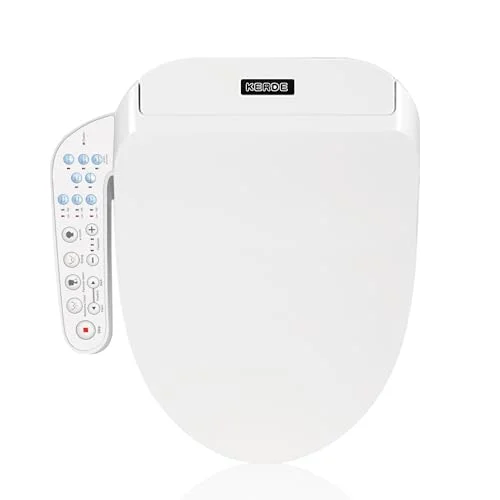
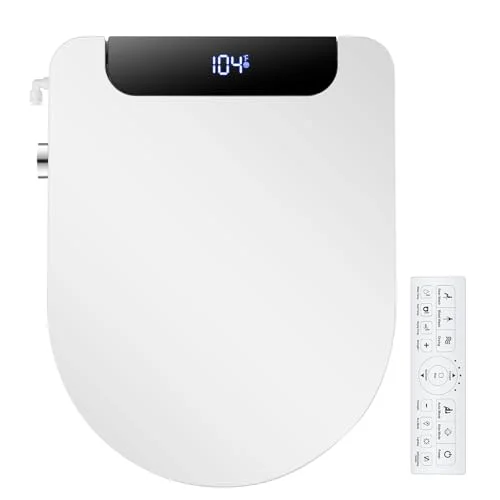
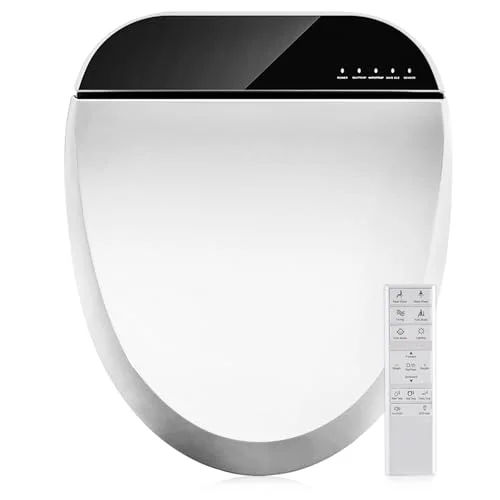
There's also a warranty consideration worth taking seriously: opening up the hinge housing or drilling into the lid to fit an aftermarket part is exactly the kind of modification that can void a manufacturer's warranty on the rest of the seat, including the parts that are expensive to replace, like the heater and pump. Given how modest the price difference is for the three seats above that include a damped hinge from the factory, the more reliable path is choosing one that already has it rather than planning to retrofit later.
The decision
So is it worth paying for?
If anyone in the house has ever been woken up by a toilet lid, or you've already heard the sharper clack that comes with a heavier electric seat lid on a standard hinge, the slow-close premium in this catalog is small enough that it isn't really a trade-off — it's closer to free, and it also removes the specific shock-loading pattern that cracks hinges in the first place. If budget is the binding constraint and the seat you want doesn't offer it, a five-dollar adhesive bumper is a legitimate stopgap, just not a substitute for the real mechanism.
Either way, a damper is a mechanical part, and mechanical parts eventually wear. When one does, how easily you can get a replacement comes down to whether the brand behind the seat actually stocks parts — the same question that matters for wands, valves, and heaters. Our look at a plumbing brand's bidet seat versus the specialists digs into exactly that gap between brands that treat bidet seats as their core product and brands that don't.